
The Psilocybin Telomeres
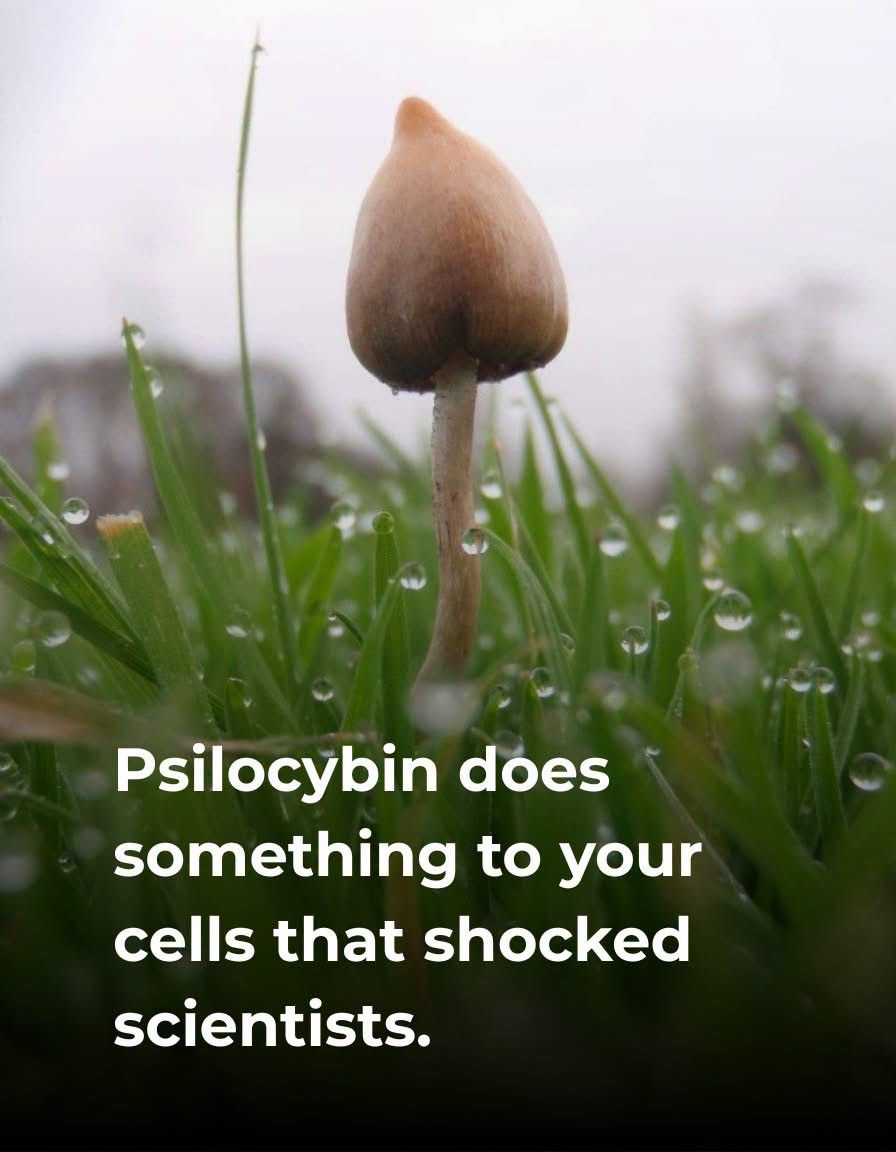
In 2019, Christopher Germann published the Psilocybin-Telomere Hypothesis, a bold, falsifiable prediction that psilocybin should measurably slow genetic aging by preserving telomere length (Germann, Medical Hypotheses, 2020).
He built the case from psilocybin's durable mental health benefits and the known link between wellbeing and longer telomeres.
Six years later, Hecker and colleagues at Emory tested it directly (Kato et al., npj Aging, 2025). In human fibroblasts, psilocin extended cellular lifespan by 29 to 57 percent depending on dose, and preserved telomere length that normally erodes with senescence.
Cells also showed lower oxidative stress and higher SIRT1, a key longevity regulator. In aged mice (60 to 65 human-years equivalent), monthly psilocybin treatment over 10 months produced 80 percent survival versus 50 percent in controls, plus visibly improved coat quality.
It's early, brief-communication-stage evidence, not a human trial, but it's the first experimental support for a hypothesis that sat untested for years, largely due to Schedule I research barriers.



Comments